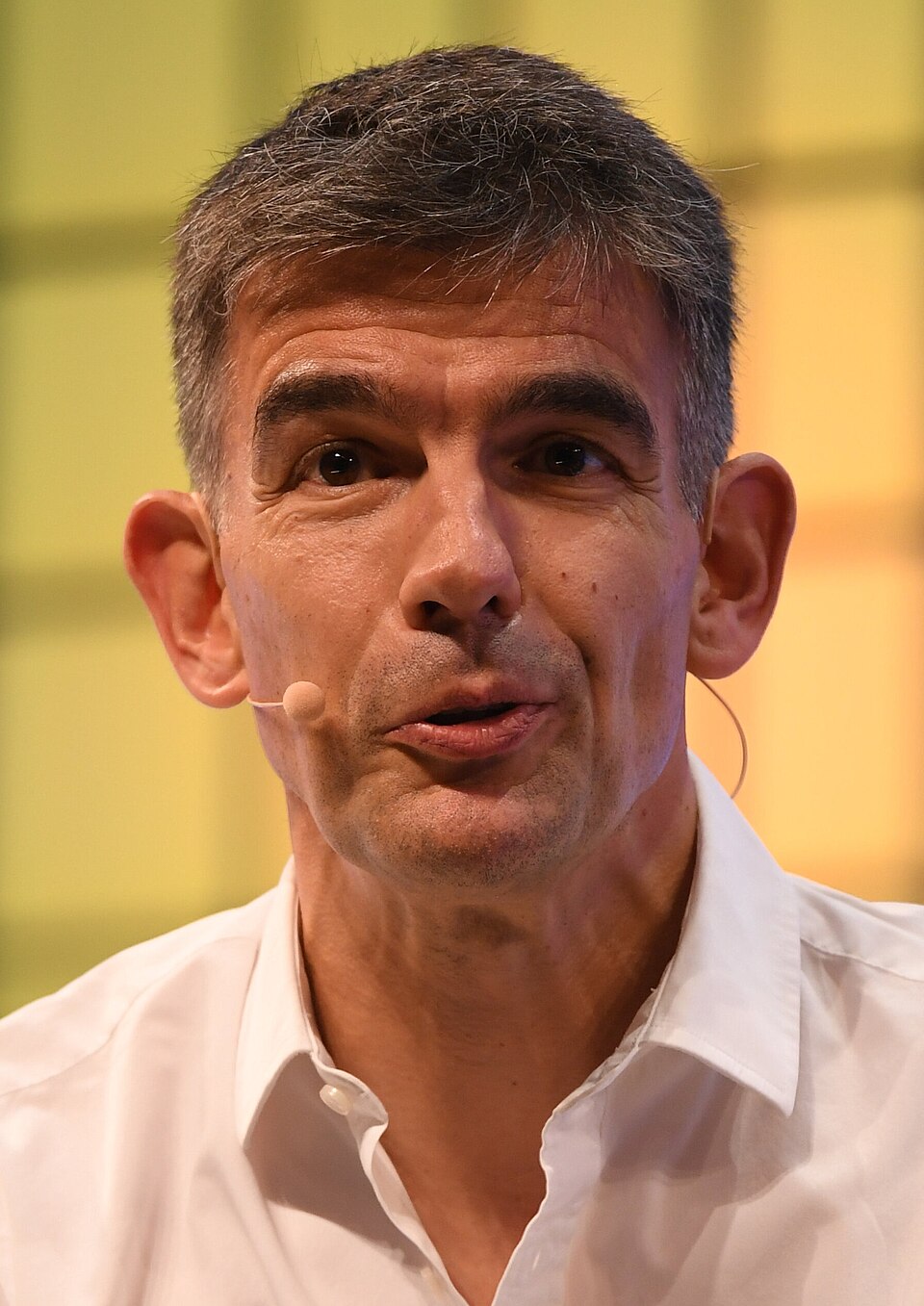
From Google Riches to BBC Pay: Matt Brittin's Salary & Net Worth Unveiled
The announcement that Matt Brittin, a seasoned veteran from the colossal tech empire Google, would take the helm as the new Director-General of the British Broadcasting Corporation (BBC) sent ripples across both the media and tech landscapes. His appointment, confirmed on May 18, 2024, replacing Tim Davie, marks a significant transition from the high-octane, profit-driven world of Silicon Valley to the deeply scrutinised, public service realm of British broadcasting. This move inevitably ignited intense public curiosity, particularly regarding Matt Brittin's salary and his considerable net worth accumulated during his illustrious career. For many, it represents not just a career change, but a fascinating case study in professional motivations, financial shifts, and the differing values placed on leadership in the private versus public sectors.
The contrast between Brittin's previous earnings at Google and his new public service remuneration is stark, prompting a closer look at the financial implications of such a high-profile switch. This article delves into the confirmed facts, separates them from speculation, and provides a comprehensive overview of Brittin’s estimated wealth, career trajectory, and how his financial profile aligns with, or deviates from, typical BBC leadership compensation.
The Significant Shift: Google's Tech Wealth to BBC's Public Service Remuneration
Matt Brittin’s career at Google spanned nearly two decades, from 2007 to 2024, culminating in his role as President of EMEA Business & Operations. During this extensive tenure, he was instrumental in expanding Google's footprint across Europe, the Middle East, and Africa – a region of immense strategic importance for the tech giant. In the world of high-tech corporations, executive compensation packages are notoriously generous, often comprising a relatively modest base salary supplemented by substantial bonuses, performance-related pay, and, most significantly, long-term equity incentives like stock options and restricted stock units. This model is designed to align executive interests with shareholder value, incentivising growth and sustained success.
For Brittin, this meant a significant potential for wealth accumulation, making the transition to the BBC a notable financial pivot. While precise figures for his Google earnings are not publicly disclosed, it is widely understood that a senior executive at his level would have commanded an annual package likely running into millions of pounds, predominantly driven by equity. The move to the BBC represents a fundamental shift: from a role primarily focused on wealth creation and market expansion to one deeply embedded in public impact and cultural stewardship. This type of career change, where a highly successful private sector leader takes on a public service role, often signifies a desire to leverage their experience for broader societal benefit rather than continued financial maximisation. It speaks to a different kind of ambition, one focused on legacy and influence over pure monetary gain.
Unpacking Matt Brittin's Net Worth: A Decade of Tech Wealth
Estimating the net worth of high-profile individuals, especially those from the private sector, can be challenging due to the lack of public disclosure. However, based on his extensive career at Google and his senior executive position, Matt Brittin’s net worth in 2026 is credibly estimated to be in the range of £10 million to £30 million. This substantial wealth is overwhelmingly the result of his corporate career, particularly his prolonged and impactful tenure in the technology sector.
The primary driver of this wealth accumulation, as is common for top-tier tech executives, was not his base salary alone but rather the generous long-term equity incentives offered by Google. These incentives, tied to the company's performance and stock valuation over many years, allowed Brittin to accumulate significant assets as Google experienced exponential growth. For instance, being granted stock options or restricted stock units at various points during Google's ascent from a fast-growing tech firm to a global behemoth would have translated into considerable financial gains upon vesting and exercise.
While specific asset disclosures remain private, it's reasonable to infer that Brittin’s portfolio would be diversified, a common strategy for high net worth individuals. This could include investments in real estate, various financial instruments, and potentially stakes in other ventures. The journey from a senior executive at one of the world's most valuable companies to the head of a public broadcaster highlights a fascinating trajectory in wealth management, where significant gains from the private sector pave the way for a pivot towards public service. For a deeper dive into the components of his wealth, read our related article: Decoding Matt Brittin's Wealth: BBC Salary, Google Earnings & Net Worth.
The £565,000 Question: What Does the BBC Director-General Earn?
Upon taking up his new role, Matt Brittin's salary as the BBC Director-General has been confirmed at £565,000 per year, which translates to approximately $756,000. This figure represents an increase from his predecessor, Tim Davie, who earned nearly £545,000. While a substantial sum by any measure, especially for a public service role funded by taxpayer money, it is crucial to understand this figure within its specific context.
Compared to what Brittin likely commanded at Google, this BBC salary represents a significant financial step down. Industry analysts and insider reports suggest that the pay for leading a major broadcast outlet like the BBC, while generous, is often considered "not that good for the blood pressure damage" given the immense pressures, public scrutiny, and political tightrope walking involved. The Director-General role is arguably the most powerful in British broadcasting, requiring leadership through constant technological disruption, evolving media consumption habits, and maintaining public trust amidst intense political and cultural debates.
Public scrutiny over BBC executive pay is a recurring theme, often amplified by the fact that the corporation is funded by the licence fee. Brittin's appointment brings with it an added layer of public interest, particularly in light of his past. Ten years ago, he faced considerable embarrassment during a parliamentary hearing concerning Google’s commitment to paying corporation tax in the UK. During that session, he appeared to be unaware of his own salary, an incident that garnered widespread media attention and highlighted the often-opaque nature of private sector compensation compared to the mandated transparency of public office. This previous encounter underscores the level of scrutiny he can expect in his new role, where every financial detail and decision will be under intense public and parliamentary examination. To understand how his new compensation compares within the broader media landscape, explore: Matt Brittin's BBC Salary: How His £565,000 Compares.
Beyond the Numbers: The Broader Implications of Leadership
Matt Brittin’s decision to move from the pinnacle of the global tech industry to the head of a national public broadcaster offers a compelling case study on the evolving nature of leadership in the 21st century. It highlights a conscious choice where factors beyond pure financial gain take precedence. For someone who has achieved significant wealth, the allure of public service often lies in the opportunity to shape national culture, influence policy, and contribute to the public good on a grand scale.
The challenges awaiting Brittin at the BBC are formidable. He steps into a role at a time when traditional broadcasting faces unprecedented competition from global streaming services, digital platforms, and social media. He will need to navigate complex issues such as maintaining impartiality in a polarised world, securing future funding models, fostering innovation, and ensuring the BBC remains relevant and trusted by all segments of the British public. These are challenges that demand not just business acumen, but also a deep understanding of media ethics, cultural sensitivities, and political realities – a vastly different environment from the fast-paced, often disruptive, world of Silicon Valley.
His prior experience with public scrutiny, particularly regarding financial transparency and corporate responsibility, will undoubtedly inform his approach. The "Matt Brittin Salary" at the BBC, while significant, pales in comparison to the immense pressure and responsibility that comes with leading such a revered yet often criticised institution. It underscores a fundamental difference between private and public sector leadership: in the former, success is often measured by shareholder returns; in the latter, it's measured by public trust, cultural impact, and the sustained delivery of a vital public service. For aspiring leaders, Brittin's move serves as a powerful reminder that career fulfillment can extend far beyond the balance sheet, into the realm of profound societal contribution.
Conclusion
Matt Brittin's journey from a high-earning executive at Google to the Director-General of the BBC is a testament to the varied motivations that drive top-tier leaders. His estimated net worth, primarily accumulated through nearly two decades of strategic contributions and equity incentives in the tech sector, firmly places him among the financially successful. However, his new annual salary of £565,000 at the BBC, while substantial, clearly signifies a pivot from wealth maximisation to a role demanding immense public responsibility and scrutiny. This transition highlights a fascinating contrast between the financial rewards of the private tech world and the unique pressures and satisfactions of leading a critical public service institution. As Brittin embarks on this challenging chapter, his leadership will be judged not just on financial performance, but on his ability to steer the BBC through an era of profound change, upholding its mission to inform, educate, and entertain the nation.